FBS Prints Team
Printing, Signage & Growth Specialists
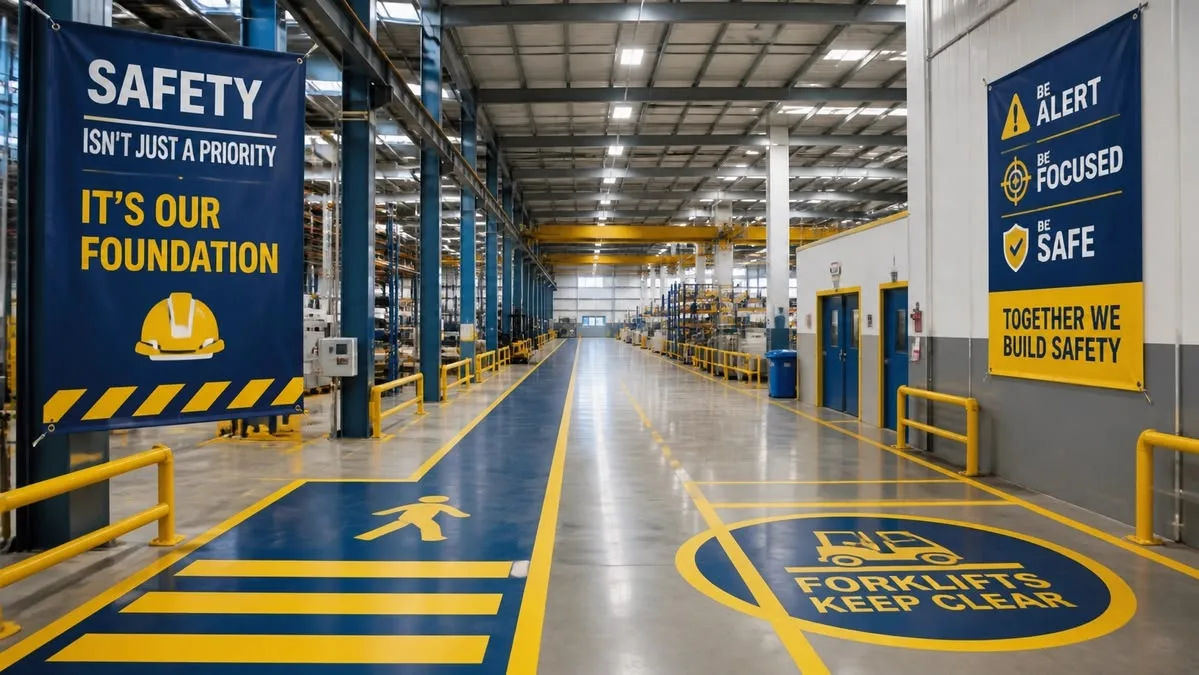
A warehouse floor moves fast — forklifts, pedestrians, and inventory all sharing tight aisles. Safety and compliance signage helps keep that environment clear at a glance, communicating hazards, required precautions, emergency information, and restricted areas where employees and visitors need to see them.
In short: warehouse safety signage may need to meet applicable OSHA requirements, while ANSI Z535 provides voluntary guidance for safety-sign design, signal words, colors, and communication formats.
What OSHA and ANSI Actually Require
OSHA's 29 CFR 1910.145 establishes requirements for certain accident-prevention signs and specifies categories including Danger, Caution, and Safety Instruction signs. ANSI Z535 provides additional voluntary guidance for designing and communicating workplace safety information.
Common safety-sign categories include:
Danger signs — used where an immediate hazard presents a situation likely to result in death or serious injury if not avoided.
Warning signs — commonly used under ANSI Z535 for serious hazards that do not meet the immediate-danger level.
Caution signs — used to identify potential hazards or unsafe practices where precautions are necessary.
Safety instruction signs — used to communicate general safety information, procedures, or instructions.
Color, signal words, symbols, wording, and layout should be selected based on the applicable requirement and the specific hazard being communicated.
Where This Applies in a Warehouse
Chicago warehouses and distribution facilities use safety signage throughout areas where employees, visitors, equipment, and materials interact. Common applications include:
- Forklift and pedestrian traffic zones
- Emergency exits and fire equipment locations
- Chemical storage and hazardous material areas
- Restricted-access or high-voltage equipment areas
- PPE requirements and general safety instructions
- Loading docks, aisles, and designated work areas
Clear, consistent signage can make it easier for employees and visitors to recognize important information without having to interpret every situation from scratch.
What Goes Into Getting It Right
Choosing the right color is only part of effective safety signage. The sign also needs to communicate its message clearly and remain visible in the actual warehouse environment.
A few factors matter:
Readable wording — messages should be concise and easy to understand at the intended viewing distance.
Recognizable symbols — appropriate safety symbols can reinforce the message where applicable.
Strong contrast — text and graphics should remain easy to distinguish from the sign background.
Proper placement — signs should be positioned where employees can see them in relation to the hazard, equipment, or activity.
Durable materials — warehouse signs may need to withstand dust, cleaning, equipment movement, and regular industrial wear.
Because standards and workplace requirements can change, businesses should confirm the current requirements that apply to their specific facility and sign type before production.
Frequently Asked Questions
What's the difference between OSHA and ANSI signage requirements?
OSHA requirements are legally enforceable where applicable. ANSI Z535 provides voluntary guidance for workplace safety-sign design and communication.
What color should a danger sign be?
OSHA specifies red as the predominant color for Danger signs under 29 CFR 1910.145.
Are warning signs required by OSHA?
OSHA 1910.145 identifies Danger, Caution, and Safety Instruction categories. ANSI Z535 also uses the Warning signal word for serious hazards.
Who is responsible for warehouse safety signage?
The employer or facility operator is generally responsible for maintaining required workplace safety measures and signage.
How often should Chicago warehouse safety signs be reviewed?
Review signage whenever the warehouse layout, equipment, hazards, or safety procedures change, and replace signs that become damaged or difficult to read.
Author Biography
FBS Prints Team
FBS Prints helps businesses grow with practical signage, printing, direct mail, web design, and SEO guidance built around real-world execution.
Next Step
Need help applying this to your business?
Explore the related service page for a deeper breakdown, then contact our team for a quote or project guidance.