FBS Prints Team
Printing, Signage & Growth Specialists
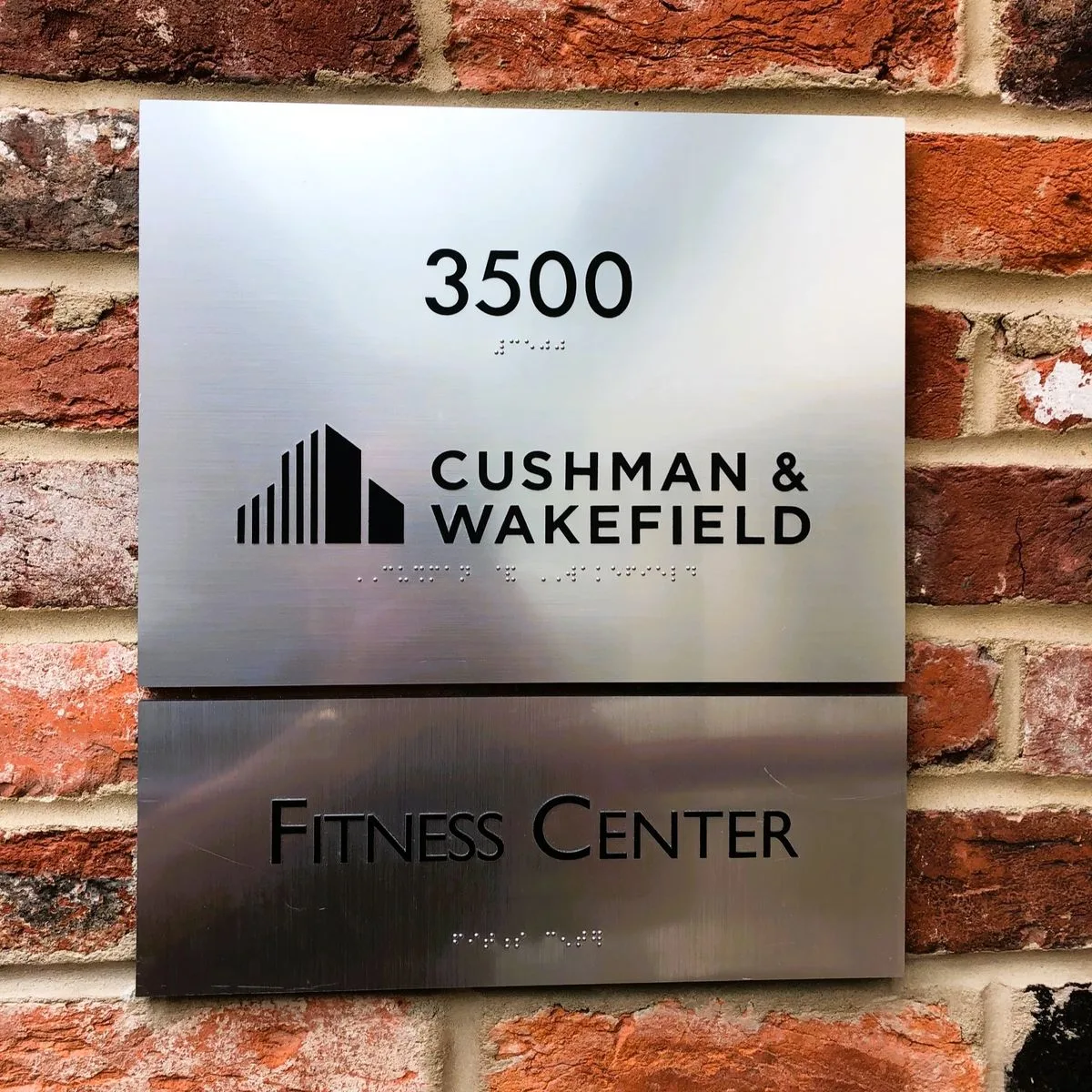
Interior signage does more than direct people to a room. For many commercial spaces, permanent room-identification signs must also meet accessibility requirements. ADA-compliant signage helps visitors navigate a building using both visual and tactile information.
How ADA-Compliant Signage Works
ADA-compliant signage typically combines raised tactile characters, Grade 2 Braille, and appropriate contrast so permanent room and space identification signs can be read visually or by touch. Requirements can cover character size, Braille placement, mounting location, and surface finish.
This makes it a strong fit for:
- Office buildings and medical facilities identifying permanent rooms and restrooms
- Multi-tenant buildings needing consistent signage across multiple suites
- Des Plaines businesses completing a new build-out or renovation
- Facilities replacing outdated interior signs with accessible alternatives
What Affects Compliance and Durability
Several production details affect both accessibility and the finished appearance:
Tactile characters and Braille — character height, spacing, and Braille specifications need to follow applicable ADA requirements
Mounting height and location — permanent room signs have specific placement requirements, including positioning near the door
Material and finish — non-glare surfaces and sufficient contrast help improve visual readability
Consistent installation — using the same signage system and placement throughout a building makes navigation easier and keeps the interior organized
A proof and layout review before fabrication can help confirm text, Braille placement, contrast, and sign dimensions before installation.
Planning for Compliance
ADA requirements vary depending on the type and purpose of a sign, so businesses should confirm the applicable standards before fabrication. Working with a signage provider familiar with accessibility requirements can help reduce the risk of having to replace incorrectly produced or installed signs.
Frequently Asked Questions
Which interior signs typically need to be ADA-compliant?
Permanent room and space identification signs, such as restroom and room signs, are commonly subject to ADA requirements. Requirements vary by sign type.
Does ADA signage need Braille?
Permanent room and space identification signs generally require Grade 2 Braille along with raised characters, subject to applicable ADA requirements.
How high should ADA signs be mounted?
Tactile characters are generally required to be positioned between 48 and 60 inches above the finished floor, measured according to ADA requirements.
Can existing signage be updated to meet ADA requirements?
Yes. Existing non-compliant signs can often be replaced with compliant versions without major construction changes.
What should businesses check before ordering ADA signage?
Review the sign type, tactile characters, Braille, contrast, mounting location, and applicable accessibility requirements before fabrication.
Author Biography
FBS Prints Team
FBS Prints helps businesses grow with practical signage, printing, direct mail, web design, and SEO guidance built around real-world execution.
Next Step
Need help applying this to your business?
Explore the related service page for a deeper breakdown, then contact our team for a quote or project guidance.